



For private practices, reputation is the engine behind patient acquisition, referral volume, and long-term loyalty. Patients have, for a long time now, been behaving like consumers: they compare options, read reviews, and check how you show up online before they ever pick up the phone.
In 2026, that behavior is overwhelmingly digital-first. For many patients, your Google listing, website, and reviews are the real waiting room — that’s where they decide whether they trust you enough to book an appointment.
This guide covers the ins and outs of healthcare reputation management. It outlines how online and offline factors intersect, which channels matter most, and how technology can help you stay ahead.
Understanding healthcare reputation management
Healthcare reputation management represents the ongoing work of shaping how patients and the public perceive your practice. Its goal is to align what people see and hear about you with the quality of care you actually deliver.
When done right, it links three things:
- What patients experience
- What they say (privately and publicly)
- How your practice responds and improves.
What does reputation mean in the healthcare context?
In healthcare, reputation is built on trust, credibility, and lived experience. Patients want to feel safe, heard, and well cared for — and they’re quick to tell others when that doesn’t happen.
However, it’s helpful to distinguish between:
- Brand reputation: The overall story people associate with your name, e.g. “they’re thorough”, “they’re chaotic”, “they’re kind but always late”.
- Patient satisfaction: How a specific patient rated a specific visit and his overall satisfaction with the care provided.
You can have good satisfaction scores and a shaky reputation (due to, for example, a single public incident that lives forever online), or a strong reputation despite some individual detractors.
The end goal is to make the day-to-day patient experience so consistently good that satisfaction feeds into a durable, trusted brand.
Online vs. offline reputation ecosystem
Your reputation lives in two connected worlds:
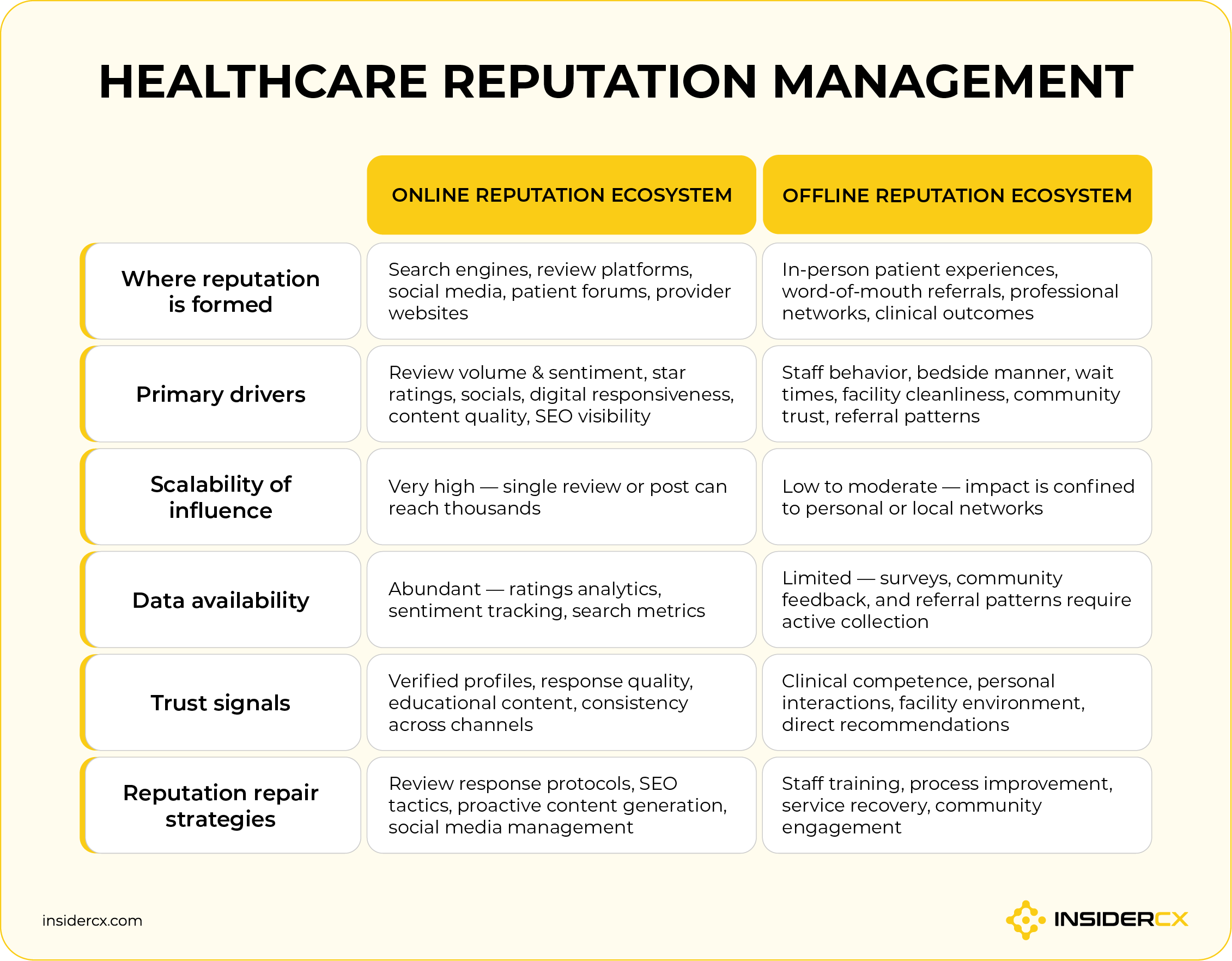
As we’ve already established, for most private practices digital is now the front door: patients often Google you, read reviews, and skim your site before they consider booking.
But that online story is written offline via real interactions in your waiting room and consulting rooms. These eventually show up as reviews, social posts, or testimonials.
The takeaway is that you can’t “manage” reputation purely with comms — you manage it by improving the experience across the patient journey and then making sure the online picture accurately reflects the quality of care you provide.
The landscape of healthcare online reputation management in 2026
Online reputation management is becoming less about occasional damage control and more about continuous, structured listening. Patients expect transparency, quick answers, and proof that you take feedback seriously.
Two big shifts are defining the landscape:
- Patients assume they’ll find everything they need online.
- Providers are increasingly judged not only on their clinical credentials but also on how they communicate and respond.
Key channels that shape patient perception
Patients rarely rely on one source. They hop across several channels before they feel confident enough to choose. Here are the most common stops on their journey:
- Google Business Profile: Usually, this is the first thing patients see. Star rating, number of reviews, opening hours, and how you respond to reviews all contribute to an instant “gut feeling”.
- Third-party review sites: Platforms like Healthgrades, RateMDs, Doctolib, Trustpilot, and insurer directories help patients compare providers and read detailed accounts from other patients.
- Social media platforms: Facebook, Instagram, and sometimes TikTok or LinkedIn act as a mix of noticeboard, Q&A channel, and community reputation hub.
- Practice websites and patient testimonials: Your website is the only place you fully control. Design, clarity, provider bios, FAQs, and featured testimonials can all influence a patient's perception.
Rising patient expectations
Healthcare is now expected to feel as simple as booking a hotel: clear information, online booking where possible, and minimal friction. If details are hard to find, or it takes days to get an answer, confidence drops fast.
An outdated or confusing website now reads as a red flag. Patients expect mobile-friendly pages, intuitive navigation, and the basics (services, prices where appropriate, insurance info, parking, hours) to be obvious.
When it comes to actual queries, your patients don’t care which internal system you use — they care that someone replies in a timely manner. Email, phone, WhatsApp, DMs, comments, and reviews are now seen as legitimate ways to contact a clinic. Slow or absent responses are themselves a negative reputational signal.
Core components of online reputation management for healthcare
Reputation is built in layers. It's an ecosystem of touchpoints that together shape how patients perceive your practice. Managing these layers requires focusing on a set of core components that are all non-negotiables — so let’s dive in.
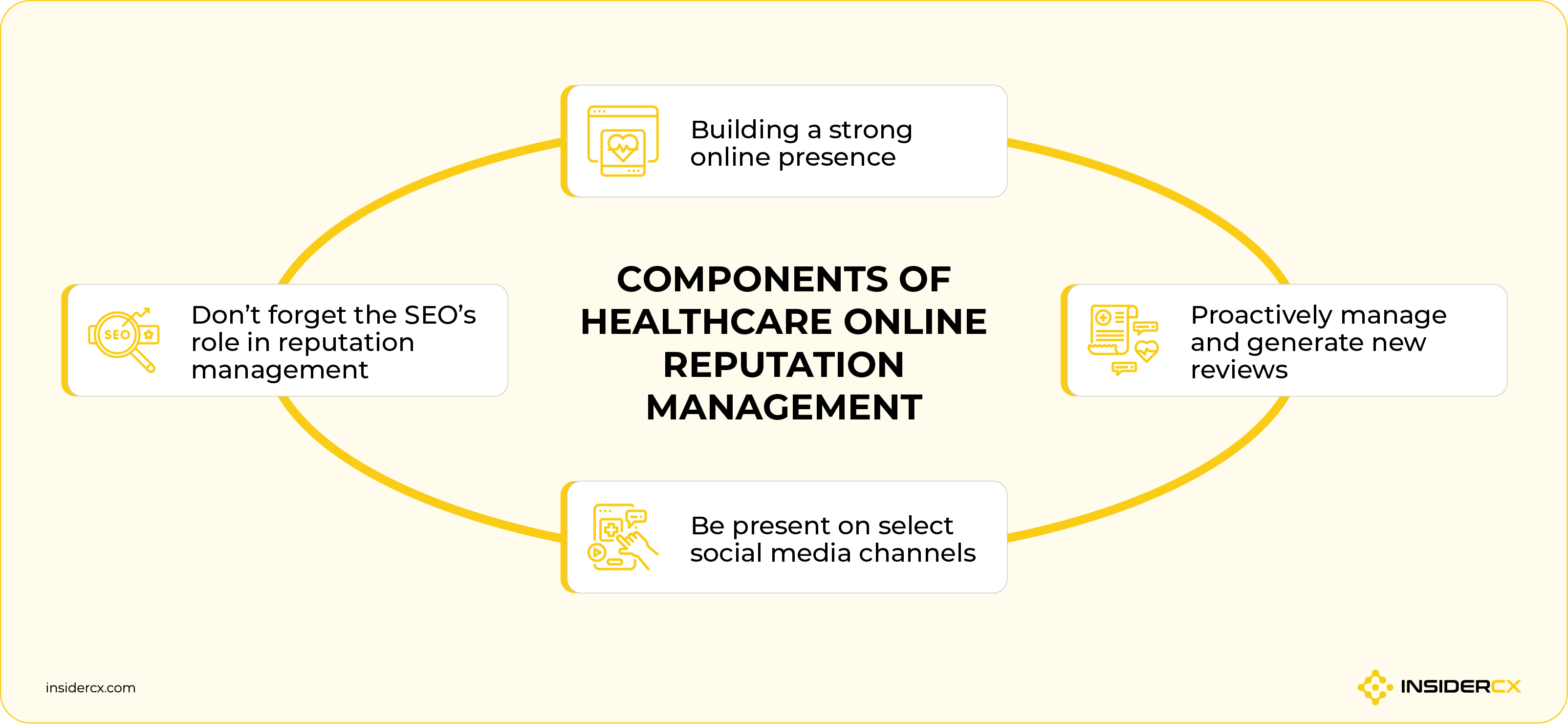
Building a strong online presence
The first step is to optimize your Google Business Profile. Claim it, verify it, and keep it current. Accurate hours, categories, photos, and a clear description are non-negotiable. Use Posts and Q&A to surface key updates and answer recurring questions.
Fixing your directory listings is next: audit major directories and healthcare platforms. Your name, address, phone, and website should match everywhere; inconsistent listings confuse patients and can hurt local search visibility. Plus, as more people start using AI to evaluate providers, having up-to-date info across public sites will be even more important.
Use the same logo, tone, and core messages across your site, profiles, and social channels. Out-of-date content (old COVID notices, retired doctors still listed) quietly undermines trust.
Proactively manage and generate new reviews
Most happy patients won’t leave a review unless prompted. Build simple, routine prompts into your workflows (e.g. a short follow-up email or SMS with a link).
At InsiderCX, we use the “thank-you” page at the end of a survey to nudge Promoters towards leaving a review on Google. The idea is to make it simple; a clickable link works best.
Never fall into the trap of buying reviews, offering rewards, or posting fake ones. And whenever you respond, never reveal or confirm clinical details — keep replies generic enough to be safe, but specific enough to feel human.
Negative reviews are going to happen. When they do, don’t ignore them, and don’t argue. Acknowledge the experience, apologize if appropriate, and invite the patient to contact you offline. Other readers are judging your tone more than the original complaint.
If multiple reviews point to the same issue (parking, waiting times, rude doctor, billing), treat it as free consultancy — then fix the underlying process and, where appropriate, say so publicly.
Be present on select social media channels
It’s easy to get overwhelmed here, but remember that you don’t need to be everywhere. For many clinics, a well-run Facebook page plus either Instagram or LinkedIn is enough. Maybe even TikTok if you have a younger audience and your team is ready to make videos. Choose based on where your patient base actually is.
When it comes to content for socials, there are a lot of different approaches that work. The safest one is to balance education and connection. You can mix short, practical health tips with behind-the-scenes glimpses of your team and practice. You’re aiming for “trusted, approachable professionals”, not a generic, stock-photo clinic.
Just like reviews, reply to questions, acknowledge praise, and handle criticisms calmly, without giving clinical details. Set clear internal rules for when to hide, delete, or escalate comments (e.g. abuse, spam).
Don’t forget the SEO’s role in reputation management
Visibility shapes credibility, and here’s how: showing up high in search results for “[specialty] + [city]” or your own name makes you look established and trustworthy. If patients can’t find you, they can’t choose you.
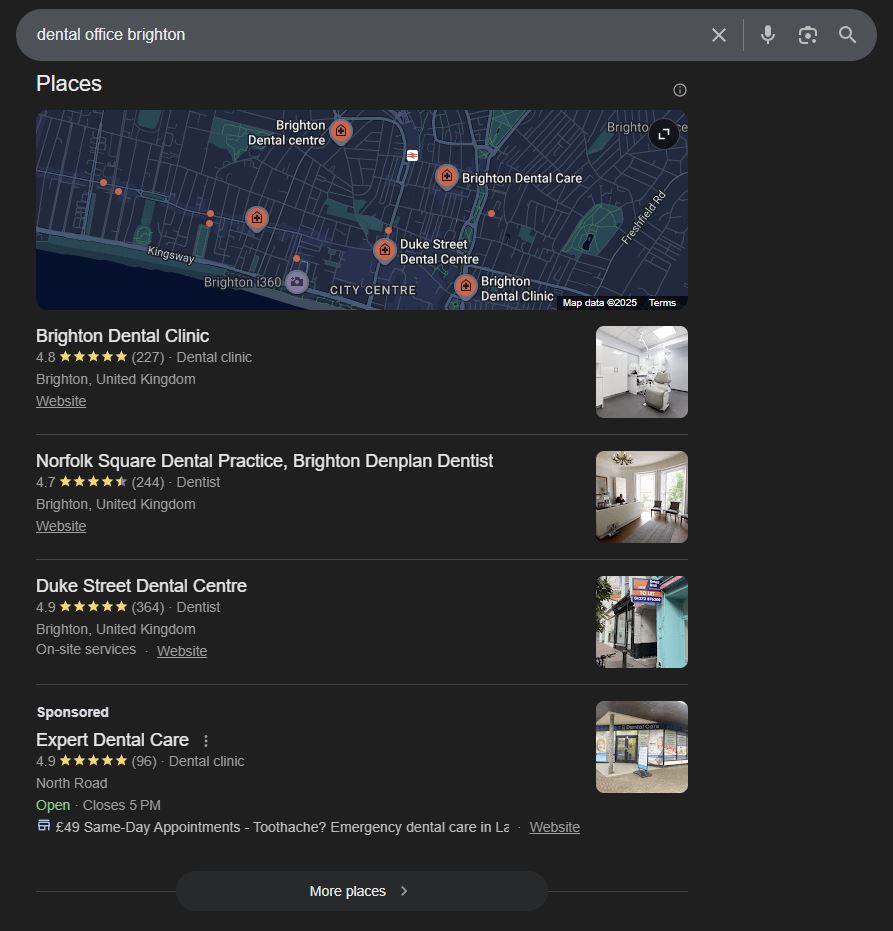
Your content also matters — as a matter of fact, it does the heavy lifting. To make SEO work as a reputation engine rather than just a traffic source, focus on:
- High-quality provider bios: Consider including credentials, specialties, conditions treated, personal care philosophy, insurance accepted, and a professional headshot. Search engines reward completeness, and patients reward transparency.
- Procedure pages and FAQs: Clear explanations of symptoms, diagnosis, treatment options, risks, benefits, and recovery timelines help patients feel informed — and reduce misinformation.
- Content that reflects patient intent: Blog posts and explainer articles on specific procedures, recovery tips, prevention, or common patient questions build topical authority and position your organization as a trusted educator.
- Location-optimized pages: Create dedicated pages for each clinic or provider location with consistent NAP (name–address–phone) data, embedded maps, directions, parking info, and localized keywords.
- Optimized patient review and stories: Make sure patient testimonials are prominently featured on your site and have proper markup.
- A modern site experience: Page speed, mobile responsiveness, accessibility, and secure browsing (HTTPS) all directly influence both SEO and patient perception.
Together, these SEO practices elevate not just your rankings but your reputation narrative — shaping what patients think about your expertise before they walk through your door.
Tools and technology for managing clinic reputation in 2026
Reputation can’t be managed with spreadsheets and good intentions alone. A modern toolkit helps you stay on top of it without overwhelming staff:
- Automated review generation via post-visit surveys: Triggered SMS/email surveys after appointments that invite feedback and reviews.
- Automated sentiment analysis: AI that reads free-text feedback at scale, tags themes (e.g. “waiting time”, “staff attitude”), and highlights what’s driving positive or negative sentiment.
- Early-warning alerts from feedback monitoring: Patient experience survey platforms can send real-time alerts when low scores, bad reviews, or recurring issues spike, so you can intervene before problems snowball.
- Suggested or prefilled responses to reviews: Template or AI-assisted replies that staff can quickly personalize, ensuring consistent, empathetic responses without starting from scratch each time.
- Chatbots and virtual assistants: On your website or messaging apps, answering common questions and handling simple tasks (like appointment requests) 24/7, boosting perceived responsiveness.
Improve the online reputation of your practice with InsiderCX
In most cases, clinics don’t lack feedback — they lack a system for turning it into action and visible reputation gains. That’s where InsiderCX comes in.
InsiderCX automates post-visit feedback collection (via SMS or WhatsApp) and pulls every response into a single dashboard. It analyses comments, tags key themes, and flags unhappy patients so your team quickly understands who needs attention and why.
On the reputation side, InsiderCX helps you:
- Turn promoters into public advocates by nudging satisfied patients to leave reviews on Google and other platforms.
- Catch detractors early, creating follow-up tasks so you can resolve issues privately before they become public complaints.
- Track key reputation metrics inside a single dashboard. Compare performance across locations and channels to see how improvements in experience translate into better ratings.
In short, our platform sits between your patient experience and your public reputation. It makes sure the good work you do inside the clinic is visible, and the problems patients surface become opportunities to improve — not issues you discover too late.
Want to get a quick overview of your clinic’s reputation? Use our free patient rater to find out your score!


